What to post after an offer.
How to announce a college offer the right way — confirming it's real, thanking the staff, and whether to post each one or wait.
Free guide · Updated 2026
First: make sure it is actually an offer
This is the mistake that causes real problems. Coaches distinguish carefully between interest, a camp invitation, a preferred walk-on spot, a roster spot, and a committable scholarship offer. Athletes announce all of these as "offers" constantly, and staffs notice.
If there is any ambiguity, ask directly: "Is this a committable scholarship offer?" No coach will think less of you for asking, and every coach will think less of you for misrepresenting one.
Thank the staff first
The standard formula — "Blessed to receive an offer from…" — exists because it works. It credits the program rather than centring only on yourself, which is exactly the tone college staffs want to see from a recruit they are considering.
Announce each one, or save them for a board
Both approaches are legitimate. Posting each offer as it arrives shows momentum and keeps you in front of other programs — recruiting is competitive, and visible offers generate more offers. Collecting them into a single graphic showing the full board makes a stronger statement and avoids fatiguing your followers.
Athletes with a lot of offers typically do both: individual posts early in the process, then a periodic board post as the list grows. The OFFERS graphic is built for exactly that second format.
Do not rank them publicly
Posting a top-five or a leader list invites every excluded program to move on. Plenty of athletes do it, and plenty of athletes lose interest from schools as a result. If you want to narrow publicly, do it late and do it once.
Keep the graphics consistent
A feed where every offer post looks like it came from the same designer reads as a serious recruitment. A feed where each one is a different template with different fonts reads as improvised. Using the same style for each offer builds something that looks intentional over a season.
When the recruitment ends
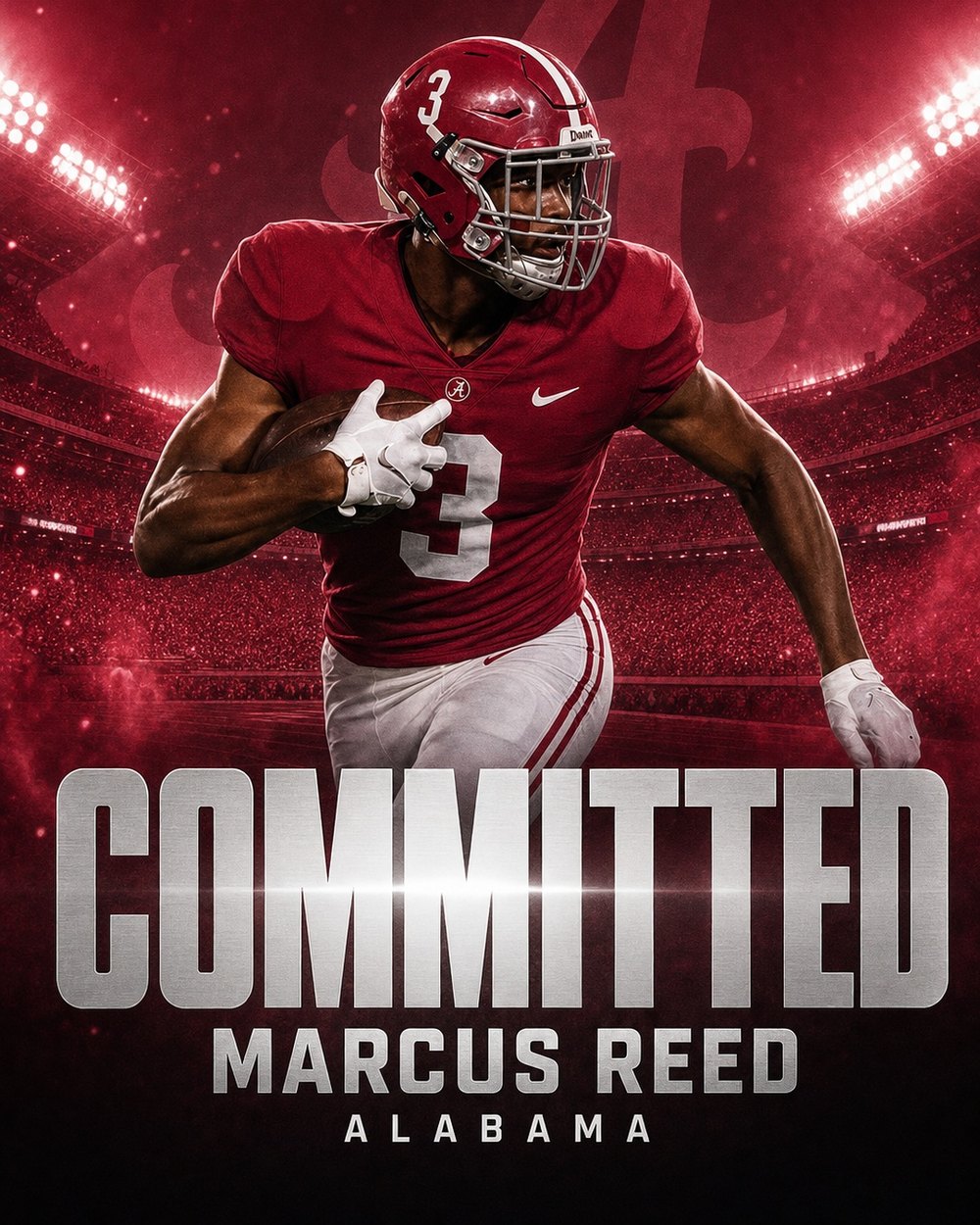
Leave the offer posts up. They are the record of what you earned, and deleting them after committing erases the story. When the decision comes, a commitment graphic marks it — and a signing day graphic marks the paperwork months later.
Make it official.
How to word it without overstating it
The phrasing carries real information to anyone reading closely. "Blessed to receive an offer from" signals a scholarship offer. "Blessed to receive a preferred walk-on opportunity" is different and should be said differently. "Excited to have earned a spot on the roster" is different again.
Athletes who blur these get caught, and it costs them credibility with the exact audience they were trying to impress. Being precise costs nothing and reads as confident rather than modest.
Tag the coach who recruited you, not just the school
The position coach or recruiting coordinator who extended the offer is the person who advocated for you internally. Tagging them specifically is both accurate and appreciated, and it substantially increases the chance the post is reshared by the program.
Timing within the recruiting cycle
Offers cluster around specific windows: after junior film goes out, after spring evaluation periods, after summer camps, and immediately after September 1 of junior year when Division I contact opens. Posting an offer during a busy window means it competes for attention; posting one in a quiet stretch means it stands out. Neither is wrong, but it is worth knowing which you are in.
Camp offers are real offers
A substantial share of offers are extended at camps, on the spot, after a coach has watched an athlete compete in person. These are legitimate and should be announced the same way. Some are conditional on academic qualification — worth clarifying with the staff before posting.
What an offers board should include
If you build a board graphic, include every scholarship offer, keep the logos or school names at consistent size, and do not rank them by placement or emphasis. Update it as new offers arrive rather than posting a new individual graphic each time once the list gets long. Athletes with double-digit offers generally switch to board updates around the fifth or sixth offer.
When the offers stop coming
Most recruitments involve a quiet stretch, and it is not a signal that anything is wrong. The recruiting calendar has genuine dead periods, and staffs work through boards in order. Continuing to post film and results during quiet stretches does more than posting about the quiet itself.
What comes next
An offer is the start of a recruitment, not the end of one. When the decision arrives, the announcement guide covers how to handle it, and the caption guide covers the wording.
Questions, answered
Should I post every college offer I get?
Both approaches work. Posting each one shows momentum and can generate more interest; collecting them into a single offers board makes a stronger statement. Many athletes do both.
How do I know if it's a real scholarship offer?
Ask the coach directly whether it is a committable scholarship offer. Coaches distinguish between interest, camp invitations, preferred walk-on spots, and committable offers.
Should I delete offer posts after I commit?
No. They are part of the record of your recruitment and show the full picture of what you earned.